
The Centre has opposed the imposition of fixed timelines on governors and the President for decisions on bills passed by state legislatures, arguing that such constraints were intentionally omitted by the Constitution's framers.

The state government, however, maintained it has no intimation so far from the central government or the governor's office regarding their "observations" on certain provisions in the Bill.

Karnataka Governor Thaawarchand Gehlot has reserved the Bill pertaining to four percent reservation for Muslims in government contracts for the President's assent, citing constitutional concerns. The Bill, which has been a subject of controversy in Karnataka, was passed by both houses of the state legislature amid protests from the opposition BJP. The Governor's decision to reserve the Bill highlights the ongoing debate over the constitutionality of religious-based reservations in India.
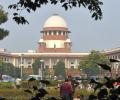
The Supreme Court has scheduled hearings starting August 19 for the Presidential Reference concerning constitutional issues related to timelines for handling bills passed by state assemblies. The court has directed the Centre and states to submit written arguments by August 12.

The government has circulated among members ofParliament a new draft of the Amendment of Insurance laws Bill, 2025, proposing stricter safeguards on the utilisation of life insurance funds and other specified insurance business funds, particularly for dividend payouts, bonuses, and servicing of debentures.
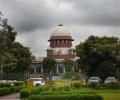
A bench comprising justices J B Pardiwala and R Mahadevan on April 8 gave a huge relief to the Dravida Munnetra Kazhagam-led Tamil Nadu government and cleared 10 state bills which were stalled and reserved by Governor R N Ravi for President's consideration, and also set a timeline for all governors to act on the bills passed by state assemblies.

The passage of the women's reservation bill has ignited hope among stakeholders about attaining gender equality in India's political landscape, especially at the policy-making level, even as some raised concerns over its effectiveness given the uncertainty in the deadline for its implementation.


The Supreme Court is examining the extent to which courts can intervene when governors delay or refuse to act on bills passed by state assemblies. The court questioned the Centre on whether judicial review is barred in cases of gubernatorial inaction, sparking debate on the balance of power between states and the central government.
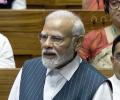
The Congress on Wednesday hit out at the government over the women's reservation bill, saying the only appropriate description of what Prime Minister Narendra Modi has done with the matter is "it is a post-dated cheque drawn on a failing bank".

As the government moves to revamp India's securities legislation, unifying three different laws into the Securities Markets Code (SMC), regulatory experts and market insiders have raised concerns on potential funding challenges for the stock market regulator.

In a landmark verdict, the Supreme court fixed a timeline for Governor to act on bills passed by the state legislature as it pulled up Tamil Nadu Governor R N Ravi for reserving 10 bills for President's consideration, saying it was against the constitutional provisions.
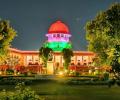
The Centre has told the Supreme Court that imposing fixed timelines on governors and the president to act on bills passed by a state Assembly would amount to one organ of the government assuming powers not vested in it by the Constitution and lead to a "constitutional disorder".

The provisions in the Constitution (128th Amendment) Bill make it clear that the women's reservation will come into effect only after the delimitation exercise or the redrawing of constituencies taking into account the data of the census conducted once the bill becomes a law.
The Karnataka government has tabled a Bill in the Legislative Assembly to introduce a 4 per cent reservation for Muslims in public contracts. The Bill aims to address unemployment among backward classes and promote their participation in government construction projects. The BJP has called the move an "unconstitutional misadventure" and vowed to oppose it.
The Supreme Court has sought the Centre's response on a plea seeking the implementation of the 2023 Nari Shakti Vandan Act, which reserves one-third of seats for women in the Lok Sabha and state assemblies.

India and Canada are negotiating a long-term uranium supply agreement worth $2.8 billion. They are also exploring expanded civil nuclear cooperation after the passage of the SHANTI Bill.

Four days after the top court cleared 10 bills, which were stalled and reserved by Tamil Nadu Governor R N Ravi for the president's consideration, and set a timeline for all governors to act on the bills passed by the state assemblies, the judgement running into 415 pages was uploaded on the apex court's website at 10.54 pm on Friday.

Dubai's core promise -- that it is an oasis untouched by regional storms -- has been tested in full public view. The coming months will show whether investors view the attacks as a short-lived disruption or a deeper signal of lasting risk, points out Asif Ullah Khan.

'There is no shortage of fuel whatsoever.' 'India is stock surplus as far as petrol and diesel are concerned.'
Prime Minister Narendra Modi on Tuesday said his government is committed to ensuring that the 'Nari Shakti Vandan Adhiniyam' aimed at expanding women's participation in the Lok Sabha and state assemblies becomes a law, as he urged MPs of both Houses of Parliament to pass the bill unanimously.

The Bharatiya Janata Party government in Gujarat on Friday passed a bill in the assembly that earmarks 27 per cent seats in local bodies like panchayats, municipalities and civic corporations for Other Backward Classes.

Opposition parties Nationalist Congress Party and Samajwadi Party on Wednesday demanded reservation for OBCs in the women's reservation bill and questioned the reason for calling a special session when the bill cannot be implemented before census and delimitation.

According to the Economic Survey 2026, the appropriate stance for 2026 is therefore one of strategic sobriety rather than defensive pessimism.

Will rising tensions between US-Israel and Iran threaten crude oil supply through the Strait of Hormuz, putting India's fuel prices, imports, and economic stability at risk?

The Karnataka government on Wednesday put the reservation bill for Kannadigas in private firms on hold amid fierce criticism from business leaders and tech tycoons.

The Defence Acquisition Council (DAC) has recently approved procurement proposals worth Rs 79,000 crore across three services and it has cleared AoN (Acceptance of Necessity) of Rs 3.3 trillion in financial year 2026 (FY26).

The Supreme Court raised concerns about a potential stalemate in Tamil Nadu due to the Governor's delay in assenting to bills passed by the state assembly. The court questioned the Governor's actions, noting that he should have communicated his concerns about the bills' constitutionality to the state government. The case focuses on the delicate balance of power between the state government and the Governor, highlighting the importance of open communication and transparency in the legislative process.

Initiating the debate on the bill from the opposition's side, Congress leader Sonia Gandhi said that any delay in bringing the reservation into effect would be "gross injustice" to Indian women.

There are no major legal complications in implementing the bill right now but the Narendra Modi government putting it off for 10 years, he said.
The Supreme Court of India has ruled that governors cannot indefinitely delay giving assent to bills passed by state legislatures, setting a timeline of one to three months for their actions. The court said the governor must act "as soon as possible" and that failure to comply with the timeline will make their inaction subject to judicial review. The ruling comes as several opposition-ruled states have accused governors of delaying assent to bills passed by their assemblies.

Congress MP Rahul Gandhi on Friday expressed his regret that the Other Backward Class (OBC) quota was not provided under the Bill brought by United Progressive Alliance (UPA) in 2010.

In the three decades since reservation of seats for women in panchayati raj institutions was introduced, the country saw women dismantling gender barriers to take the lead in the political field at the grassroots level and excel in it.

While the governor gave his assent to the significant public health bill, he has reserved seven bills, including the controversial University Amendment Bill, for presidential assent, Raj Bhavan said on Tuesday.

Tamil Nadu Chief Minister M K Stalin has welcomed the Supreme Court's ruling that state governors must give assent to bills passed by state assemblies, calling it a 'historic' victory for all state governments in India. The court's decision came after the Governor of Tamil Nadu, R N Ravi, withheld assent to several bills passed by the state legislature. The court found that the governor's actions were in violation of the Indian Constitution, which mandates that governors must act on the advice of the council of ministers. The ruling is seen as a significant step towards strengthening the federal structure of India.

Gold prices surged by Rs 4,000 to touch an all-time high of Rs 1,37,600 per 10 grams in the national capital on Monday, tracking firm global cues, according to the All India Sarafa Association. The precious metal of 99.9 per cent purity had closed at Rs 1,33,600 per 10 grams on Friday.

Three laws passed in Parliament could boost central revenues, reshape GST cess flows, shift MGNREGA costs to states and create new budget headroom ahead of the 2026-2027 Union Budget, points out A K Bhattacharya.

Initiating the debate from the opposition's side in the Lok Sabha, Gandhi said, "I stand here in support of Nari Shakti Vandan Adhiniyam."

The Lok Sabha, India's lower house of Parliament, will debate the contentious Waqf (Amendment) Bill on Wednesday. The bill has been met with strong opposition from several parties who claim it is unconstitutional. The government, however, insists the bill aims to improve the management of Waqf properties in India by bringing transparency and efficiency.
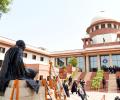
Calling itself the "custodian of the Constitution", the Supreme Court on Thursday asked if it could "sit idle" if a constitutional functionary like governor failed to discharge duties, as it reserved its verdict on the presidential reference on grant of assent to bills.
